Showing posts with label breyer racehorse. Show all posts

Friday, June 6, 2025

Friday Featurette: the Rare Red Saddle Blanket

I have been up to my eyeballs working on a couple of major writing projects for the last several months, and unfortunately, that means I have been neglecting this blog. (I have actually been doing a bit of writing here and there on several different posts, but all of them are proving to be more convoluted and research-heavy that I anticipated.) I am hoping June will be a bit more chill for me (hahaha), and I am going to try to get a couple of posts finished up before BreyerFest. Fingers crossed!

Anyway, on to the subject of today's post! When it comes to vintage Breyer rarities, sometimes it's a piece of ephemera like a box or a hang tag or an accessory that is the truly rare feature of a model rather than the actual horse (or animal) itself. Such is the case with the very hard to find red plastic saddle blankets that are occasionally found with Fury Prancers. 

A few years ago, I was surfing eBay and stumbled across an auction lot of about a dozen miscellaneous Hartland and Breyer horses, riders, and accessories from the 1950s and 1960s. I had been keeping an eye out for some time for the aforementioned elusive red saddle blanket, and lo and behold, I finally spotted one in that lot. I won the auction for a very reasonable price and was thrilled when my lucky find arrived. 


As you can see, the red plastic saddle blanket is meant to be paired with the English saddle that was also used on the old #36 Racehorse mold and the #P440 Canadian Mountie set. The blanket is identical to the one that came with the Mountie except that it is red instead of the usual blue. The red saddle blanket also has gold trim around the edge while the Mountie's blanket has yellow trim. 


This set also has the rare Drewry Beer stickers 
on the saddle blanket.

Not many of these red saddle blanket sets have turned up, and to the best of my knowledge, it seems they were likely only available for a year or so. The only evidence I know of for them is a partial Breyer dealer catalog that probably dates to 1956. The catalog describes the white Fury Prancer as wearing a "gay red saddle blanket" although weirdly the picture appears to show a horse with a dark colored blanket. (ETA: Fellow Fury fiend Robin R let me know that the IDYB page is just a dark scan. Her copy of the page does show a red saddle blanket.)


Image from Identify Your Breyer

The price list from the same catalog indicates that retailers could order riderless Fury Prancers in a variety of colors and could specify either Western or English saddles for the models. Given the scarcity of the red saddle blankets that came with the English saddles and the text on the price list, it would seem that Western saddles were shipped by default if the retailer didn't specifically ask for a particular style of saddle. Perhaps few retailers asked for English saddles since TV and movie Westerns were hugely popular at the time, and they thought the Western saddles would be more appealing to their customers..

Image from Identify Your Breyer


Whatever the reason, the option for English saddles was no longer listed in the 1958 dealer catalog or price list. (If a 1957 catalog exists, it has not yet come to light.) At least one collector has found a white Fury Prancer with the red saddle blanket and English saddle paired with a Canadian Mountie rider. Perhaps leftover red saddle blankets from the riderless offerings were occasionally sold with Mounties instead of the usual blue? 

Which brings me to the mysterious white Fury Prancer music box. As I wrote in my blog post about music boxes, at least one example of this most elusive of Fury Prancers was spotted in an online auction sporting a red saddle blanket and English saddle combo. Based on extant catalogs and what we know about the palomino and pinto Fury music boxes, the white one was possibly made in 1955 or 1956 for Simpsons-Sears in Canada, and it may have had a Canadian Mountie rider. Until a collector finds another one and can identify the tune it plays, this may remain a mystery.

The red saddle blankets can therefore only date to late 1955 at the earliest as that's when the Fury Prancer models first became available just in time for holiday catalog orders. The one known Breyer dealer catalog that lists them is probably from 1956 based on the models listed in it, and they could have been available as late as 1957. Until a catalog or price list from that year turns up, we can't say for sure. But given how very scarce these little blankets are, I would guess they were only available for a short time in 1956 and were probably discontinued partway through the year due to lack of orders. We may never know the exact details of their production, but the red saddle blankets continue to be very desirable to vintage collectors. 

I hope you all have great weekends! Thanks for reading!

Friday, July 12, 2013

Friday Featurette: Wooden Horses Part 2

As I mentioned in last Friday's blog post, the Breyer Racehorse bears a striking resemblance to the earlier "Whirlaway" model produced by Grand Wood Carving, a company that was located mere blocks from the Breyer factory near downtown Chicago in the 1950s. The resemblance is in fact too great to be a coincidence. The Breyer Racehorse was without a doubt copied from the GWC piece. (A number of early Breyer models were copies of pieces by other companies---the Western Horse (Hartland Champ), the Proud Arab Mare and Foal and Family Arab Stallion (Hagen-Renaker's Large Zara, Zilla, and Amir), the Large Poodle (Rosenthal), the Walking Hereford and Boxer (Boehm), etc---but that will be a subject for later post.)

GWC "Whirlaway" on the left, Breyer Woodgrain Racehorse on the right

The real horse Whirlaway won the Triple Crown for Calumet Farm in 1941, so we know the GWC piece must date to that year or later. Most of the GWC racehorses are portraits of horses from the 1930s-1950s, but they may have been produced after those years as well. I don't have any paperwork from the company unfortunately, so I'm not sure how long any of their horses were made. Nancy Young, author of Breyer Molds and Models, believed their heyday had ended by the 1960s.

Breyer's records from the 1950s are likewise pretty spotty. We do know that the Racehorse was the third equine model released by Breyer (circa 1954, preceded only by the Western Horse and Pony), and the mold was also one of the first to be released in woodgrain (circa 1959). The mold was undoubtedly copied directly from Grand Wood Carving's Whirlaway model as the comparison photo above attests, and I think that it's very likely that the distinctive woodgrain color with white markings was inspired by GWC as well.

 Tenite sticker on a Woodgrain Poodle

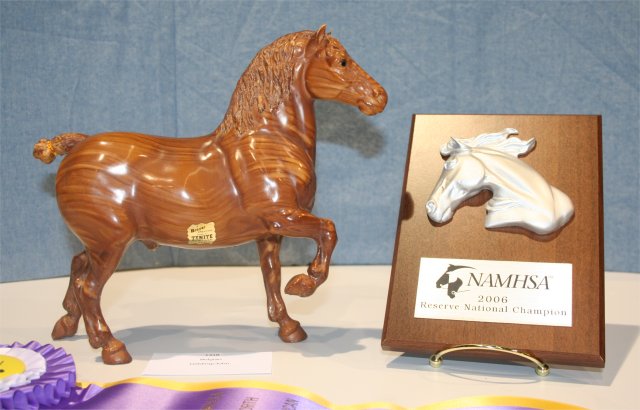
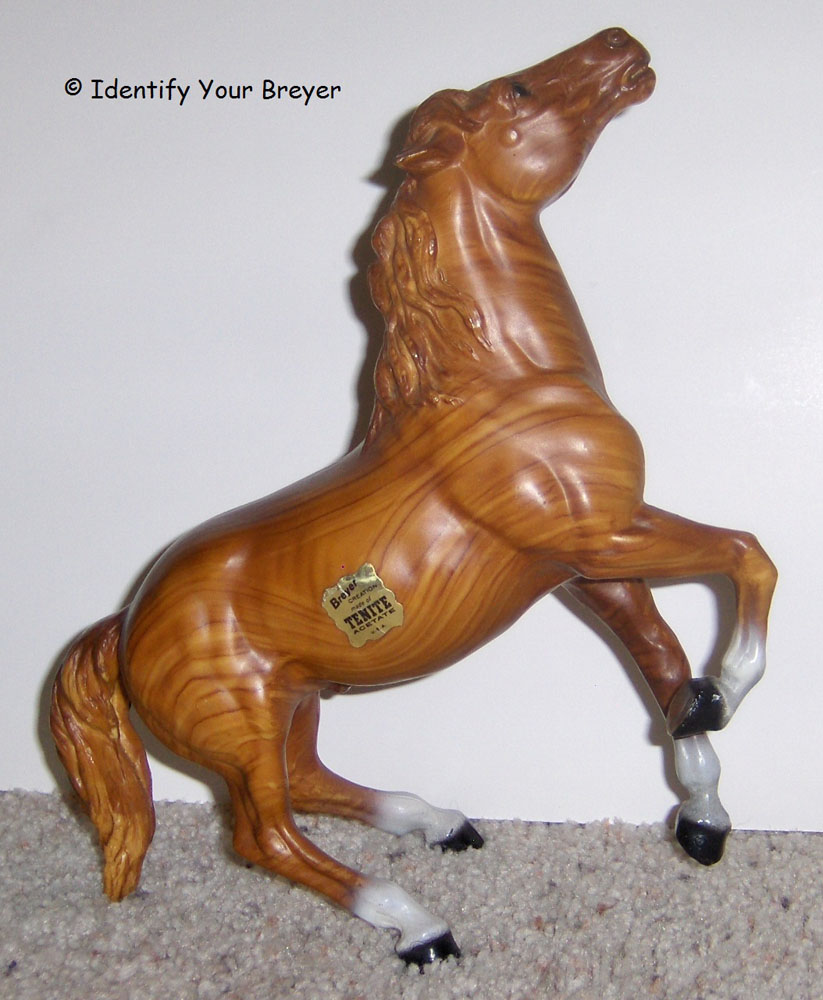
An interesting feature sported by some of the early Breyer woodgrains are gold foil stickers that declare them to be "made of tenite acetate." Glossy realistically colored models such as the Appaloosa PAM and PAF occasionally had these gold stickers as well. Presumably, they were to indicate and emphasize that the models were indeed durable plastic rather than wood (or porcelain in the case of the realistic models). The plastic models were also likely cheaper than their wood or porcelain counterparts while still looking the part.

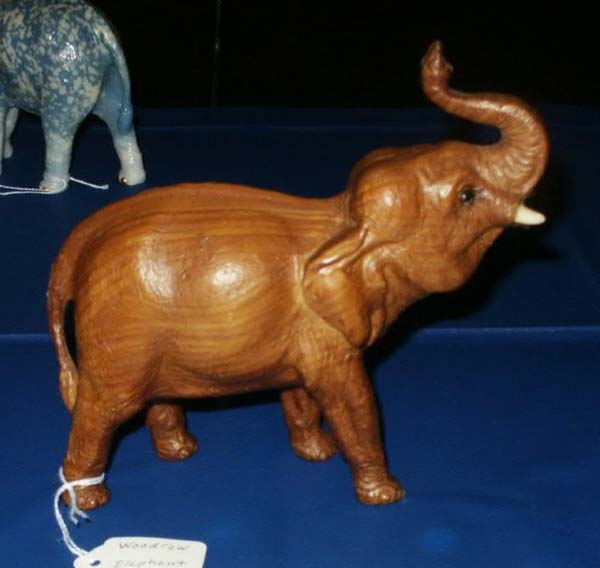
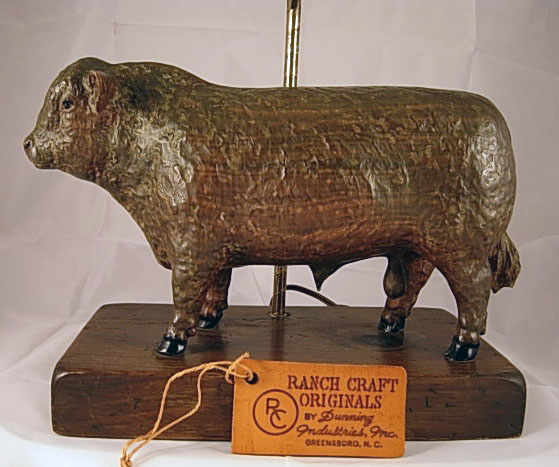
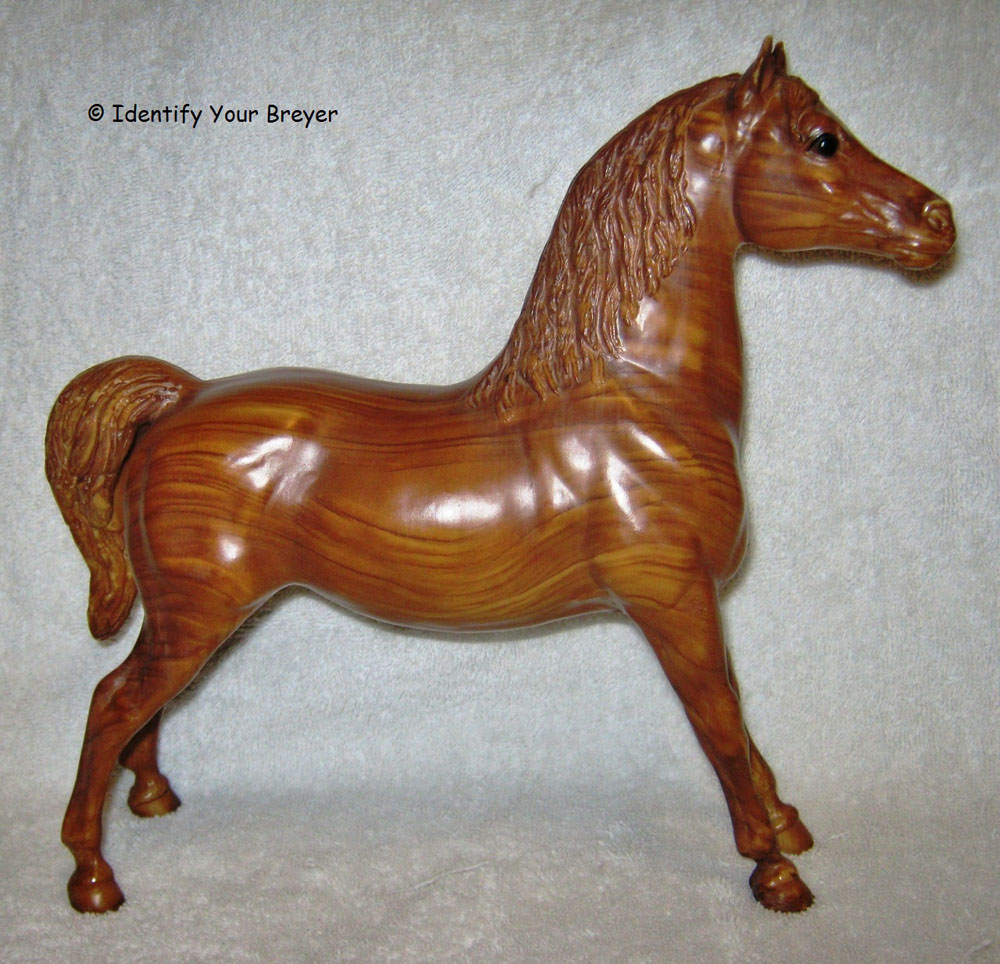
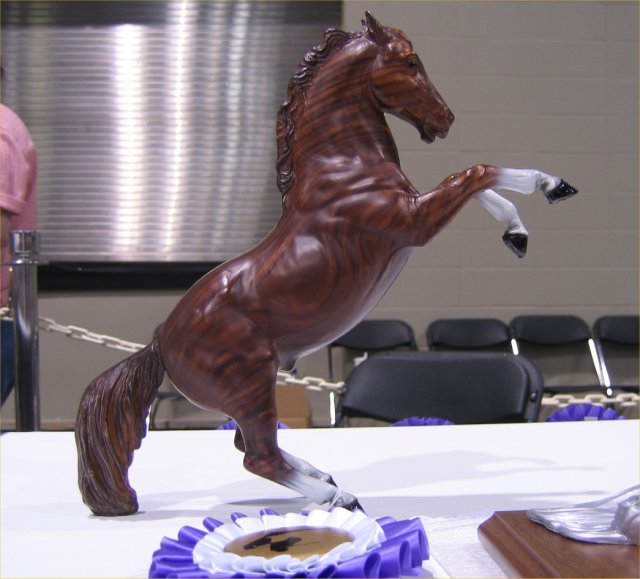
Breyer eventually produced 29 different horse and animal molds in the woodgrain color. Some are just streaked brown with no painted details other than black eyes while others have added white socks, a white star, and black hooves. Most woodgrains are matte to semi-gloss in terms of finish, though some, often those found on the Dunning "Ranchcraft" lamps, have a high semi-gloss or even glossy finish. The last woodgrain in production, the Fighting Stallion, was discontinued at the end of 1973. 

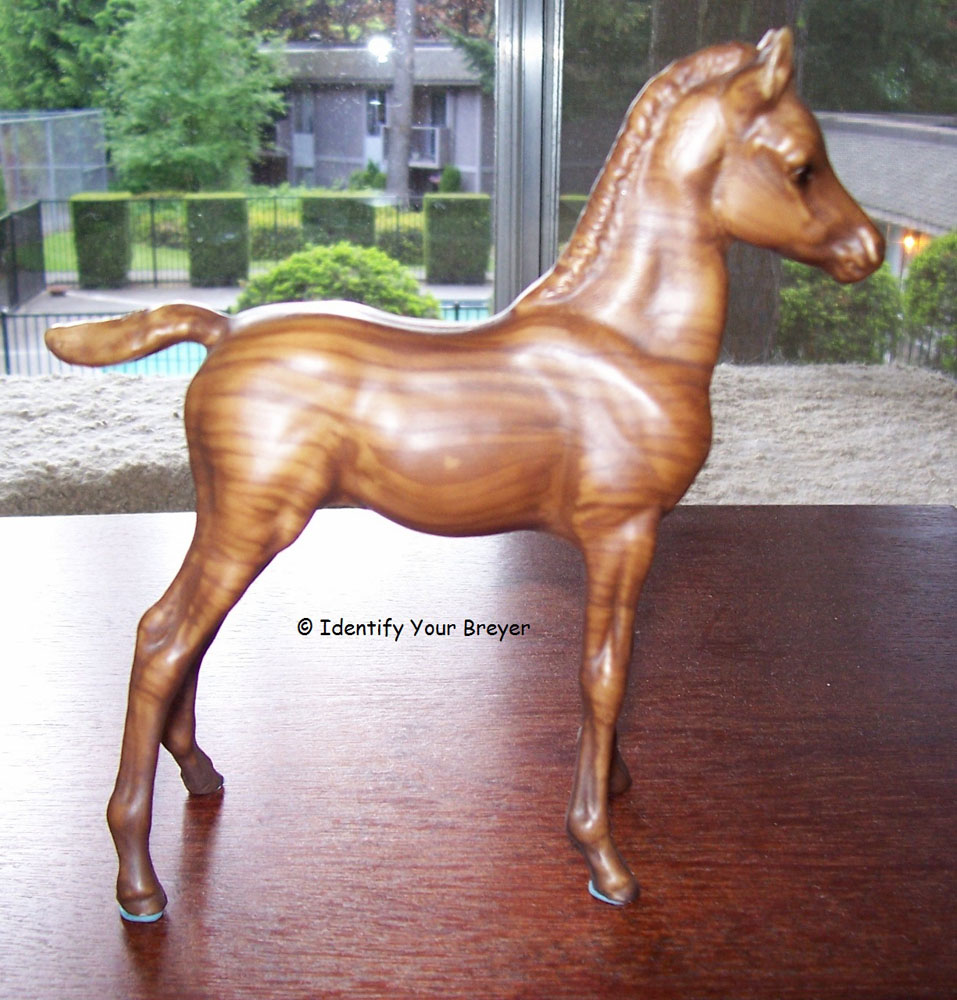
In terms of collectibility, the woodgrain line includes some of the very rarest and most desirable Breyer models ever made. Seven of them are rare enough that only a handful of examples of each are presently known to collectors. They are the Buffalo, Donkey, Elephant, In-Between Mare, Polled Hereford, Proud Arabian Foal, and Walking Angus molds.

 
Woodgrain Buffalo Lamp

Both the Woodgrain Buffalo and the Woodgrain Hereford have only been found on lamps (to date) which suggests that they may have been special runs for Dunning Industries and never regular releases. (One Hereford does exist without a lamp, but the model has holes in its feet indicating that it was probably on a lamp at one time or was intended for a lamp.) The PAF was likely a regular run along with the PAM, but because of the copyright infringement lawsuit brought by Hagen-Renaker in 1959, we know that not many of them were sold before production was halted. The In-Between Mare, if it was actually released, was discontinued before very many were made. (You can read more on the HR lawsuit and the In-Between Mares here.) The others were possibly short special runs although no documentation on any of them has yet come to light. It's possible they were regular runs that were just never issued in large numbers for whatever reason.

Woodgrain Proud Arab Mare

Several other woodgrain models are considered very rare, and while they are hard to find, they do exist in greater numbers than the seven listed above. They are the Proud Arab Mare, the Fury, the Belgian, and the Stretch Morgan. Interestingly, though several dozen of each of these models are probably accounted for in collectors' hands, these four models are still highly desirable and command four-figure prices not far behind the rarest seven.

Most of the other woodgrain models are reasonably common, though several command multiple hundreds of dollars, such as the Mustang and the Walking Hereford. Others, like the Family Arabians or Fighting Stallion can be found and purchased at easily affordable prices, often less than the cost of a new Breyer.

Woodgrain Fury

The "graining" on Breyer's woodgrain models varies from model to model. Some, like the Fury above, have bold stripes of light and dark paint while others are more uniform in tone. The shade of brown used on these models also ranges from golden to dark chocolate. Many woodgrain Running Mares, Running Foals, and Fighting Stallions that came on the Dunning "Ranchcraft" lamps exhibit the dark brown coloration.

 Click to see a larger view

Besides the usual rubs and scratches other models are prone to, woodgrains sometimes develop bubbling as seen in the picture above. The exact cause is unknown, but it may be the result of exposure to heat and/or humidity. Woodgrains with semi-gloss or glossy topcoats occasionally develop a milky opacity to the finish, especially in the muscle grooves or other areas where the finish may have pooled. In my experience, both as a collectibility shower and a judge, in the show ring, only bubbling is generally considered a flaw.

Breyer has attempted to revive the woodgrain color twice since it was discontinued. In the early 1990s in Just About Horses, Breyer announced an upcoming special run series of new woodgrains. Unfortunately, according to Breyer historian Nancy Young, Peter Stone said the run was cancelled because the last Breyer employee who knew how to paint the distinctive color had left the company. Rumors have also circulated for years that the chemicals and/or paint used to create the woodgrain look were no longer legal. Then in 1999, Breyer released two woodgrain keychains, the G2 Andalusian and G2 Clydesdale, as a special run for Breyerfest. The models are dark reddish-brown with subtle darker striping, but they bear very little resemblance to the original vintage woodgrains. But given the recent success Breyer has had at duplicating some of their unique vintage paint jobs for the Vintage Club, I'm hopeful they'll try woodgrain again soon.

Next time: Hartland woodcuts!