If a flocked model appeared as a regular run in a Breyer catalog, as a special run in the Sears, J. C. Penneys, or Montgomery Wards holiday catalogs, or as a BreyerFest special run, it is considered original finish. If it did not, it's aftermarket or custom. The distinguishing factor is the intent behind the models' creation---the catalog issue models were specially ordered by Breyer and retailers in a collaboration with an Indiana company called Riegseckers. All other flockie models were produced produced independently---with no orders or input from Breyer---by a variety of family business and hobby customizers including Riegseckers, Eighmeys, the Diercks and Algyre family, and many others.
 |
| 1984 Sears SR Flocked Misty and Stormy |
Traditional Scale Flockies
Clydesdale Mare
---1983 (Sears): Flocked bay with ribbons and bridle
Fighting Stallion
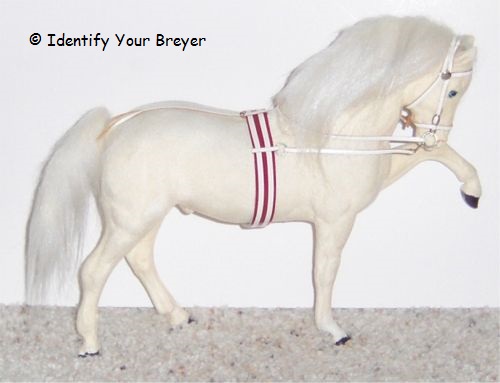
---1985 (J.C. Penneys): Flocked white with bridle, surcingle, red plume, and ringmaster Ben doll
Legionario
---1985 (J.C. Penneys): Flocked white with bridle, surcingle, red plume, and tutu Brenda doll
Misty
---1984 (Sears): Flocked palomino pinto sold with foal, Stormy (pictured above)
PAS (bay, chestnut, buggy)
---1983 (Montgomery Ward): Flocked chestnut (same as the one sold with the buggy below)
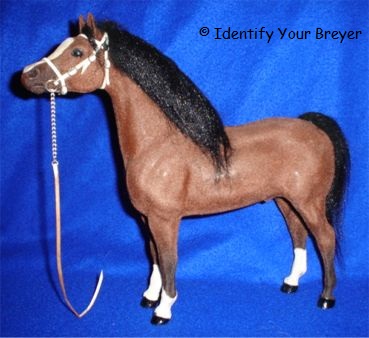
---1984 (Montgomery Ward): Flocked bay with bridle and lead rope
---1984 (Montgomery Ward): Flocked chestnut with harness and buggy
Rocking Horse (Saddlebred Weanling mold)
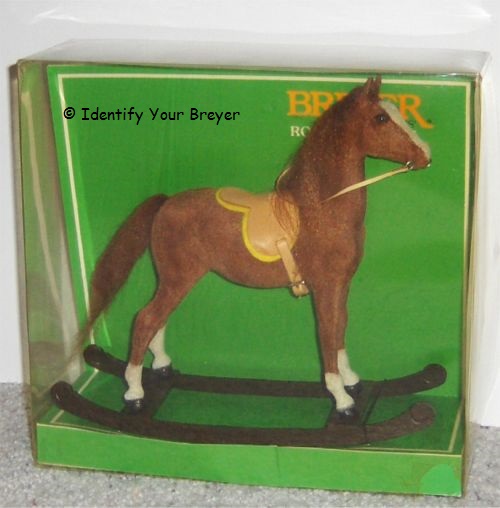
---1985-1987 (Regular Run): Chestnut with bridle and saddle on rockers
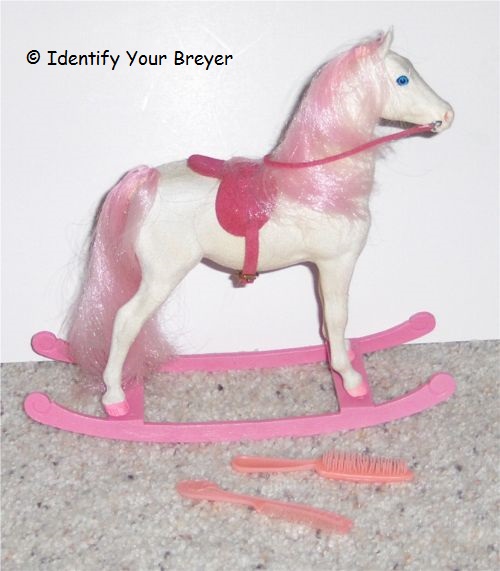
---1985 (JCP): White with pink mane and tail, pink tack
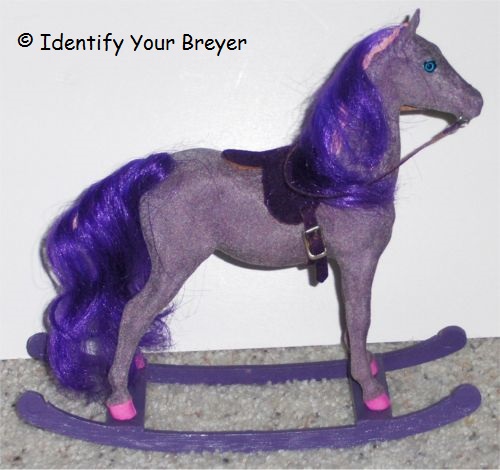
---1985 (JCP): Lavender with purple mane and tail, purple tack
---1985 (Sears): Black blanket appaloosa, black tack
Running Foal
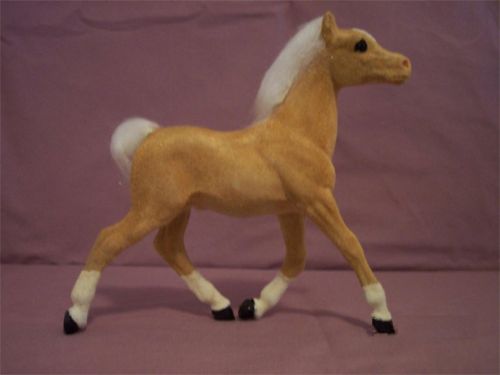
---1984 (JCP): Flocked Palomino (sold with matching mare)
---1985 (JCP): Flocked white with pink mane and tail (sold with matching mare)
Running Mare
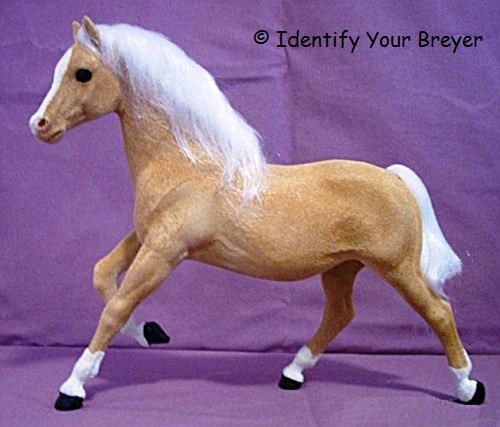
---1984 (JCP): Flocked Palomino (sold with matching foal)
---1985 (JCP): Flocked white with pink mane and tail (sold with matching foal)
Running Stallion (Unicorn)
---1985 (JCP): Flocked turquoise/light blue unicorn with darker turquoise mane and tail
Smokey
---1984 (JCP): Flocked white unicorn with light grey mane and tail
Stormy
---1984 (Sears): Flocked chestnut pinto sold with mare, Misty (pictured above)
Classic Scale Flockies
Black Beauty
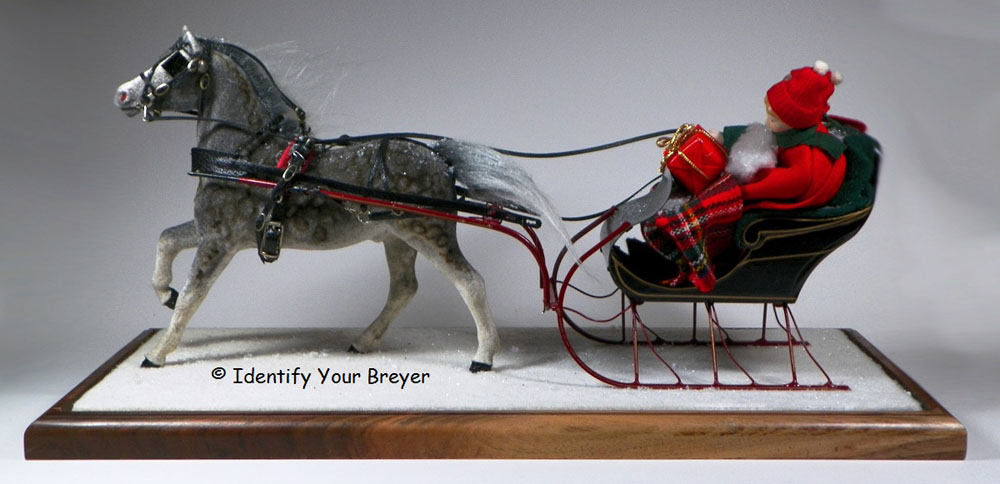
---1984 (JCP): Flocked dapple grey with sleigh
Black Stallion
---1984-1987 (RR): Flocked bay with doctor's buggy
Duchess
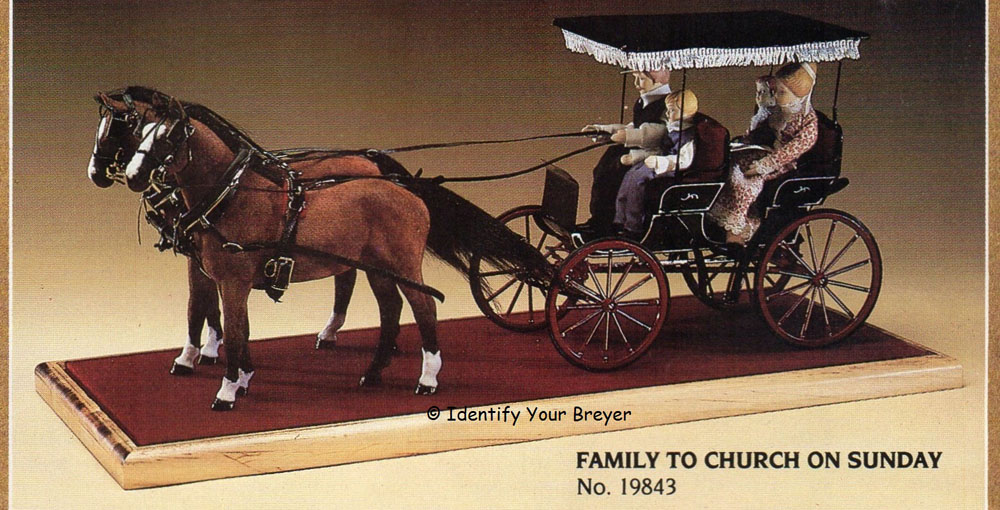
---1984-1987 (RR): Flocked bay (with matching teammate flocked bay Jet Run) and 4-wheeled Sunday church buggy
Jet Run
---1984-1987 (RR): Flocked bay (with matching teammate flocked bay Duchess) and 4-wheeled, roofed Sunday church buggy
Johar
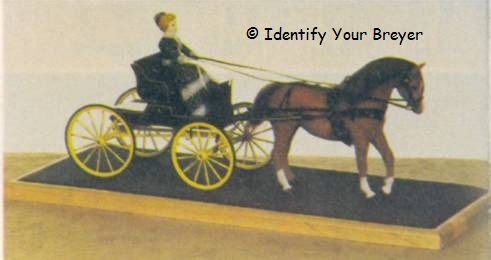
---1984-1987 (RR): Flocked chestnut with 4-wheeled open buggy
Keen
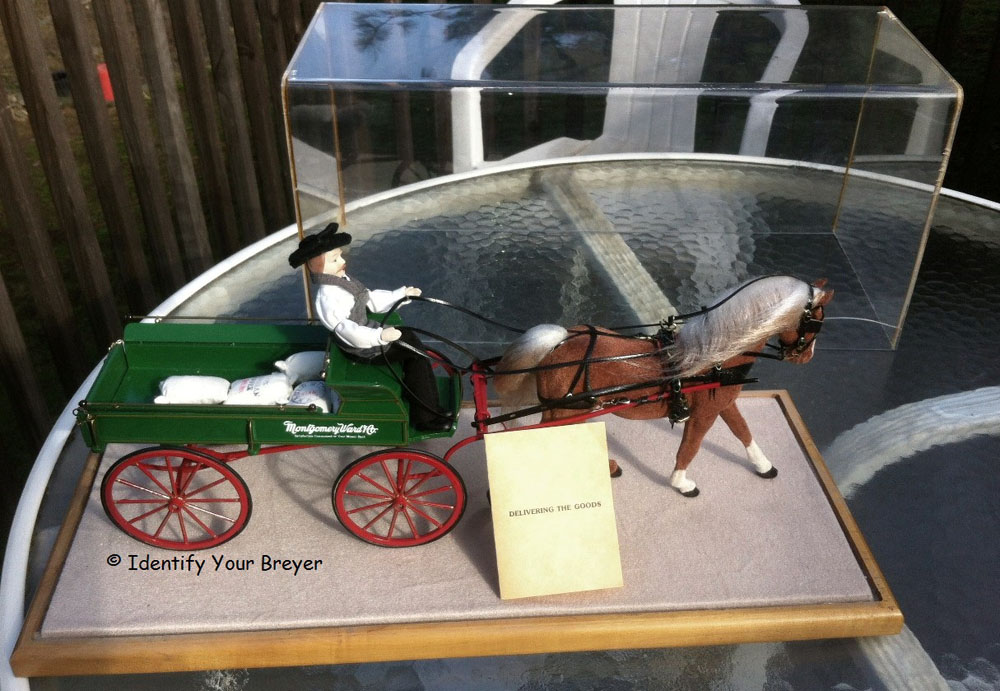
---1984 (MW): Flocked flaxen chestnut with green delivery wagon (says MW)
---1987 (RR): Same as above, but wagon is painted solid green
Lippizan (Pegasus)
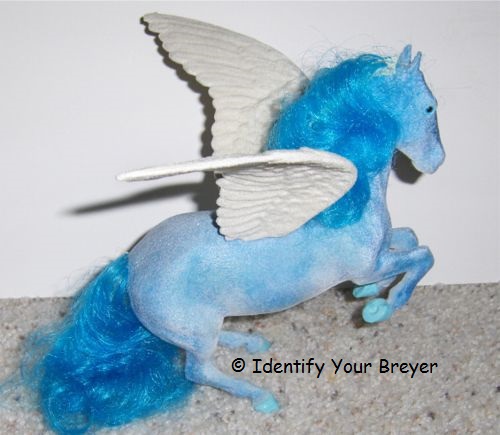
---1985 (JCP): Flocked turquoise/light blue unicorn with darker turquoise mane and tail
Merrylegs
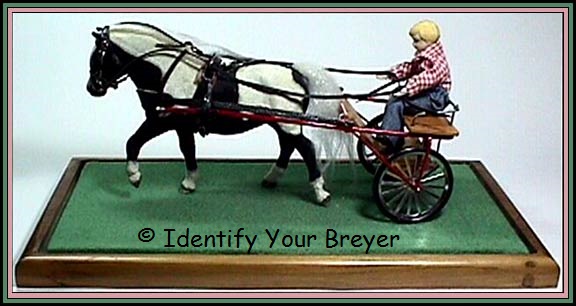
---1985 (MW): Flocked black pinto with pony cart
---1987 (RR): Same as above
Other Scales
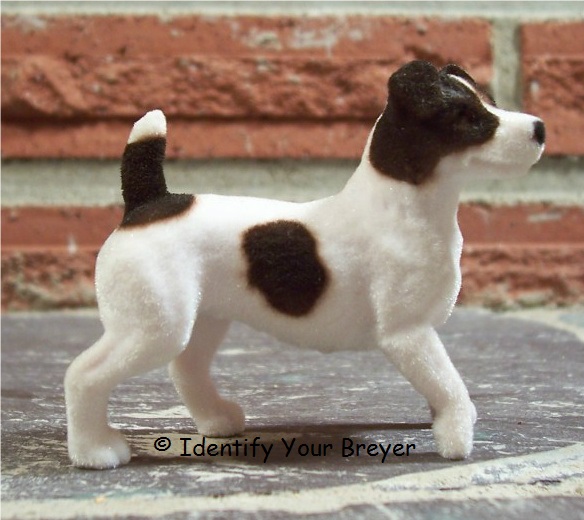
Companion Animal Jack Russell
---2001 (BreyerFest): Flocked brown and white (came with flocked SM G2 Morgan)
Stablemate G2 Arabian (Rearing)
---2001 (BreyerFest): Flocked chestnut pinto (came with flocked SM G2 Galloping Foal)
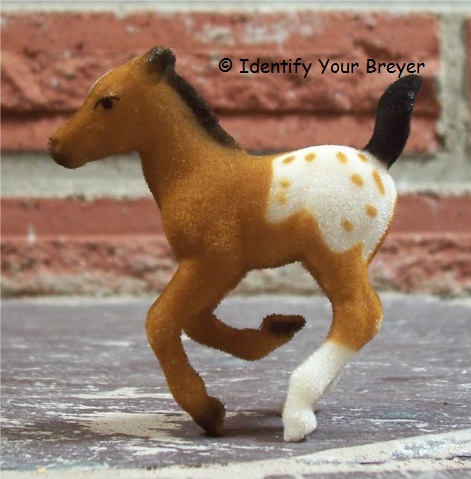
Stablemate G2 Galloping Foal
---2001 (BreyerFest): Flocked buckskin blanket appaloosa (came with flocked SM G2 Arabian)
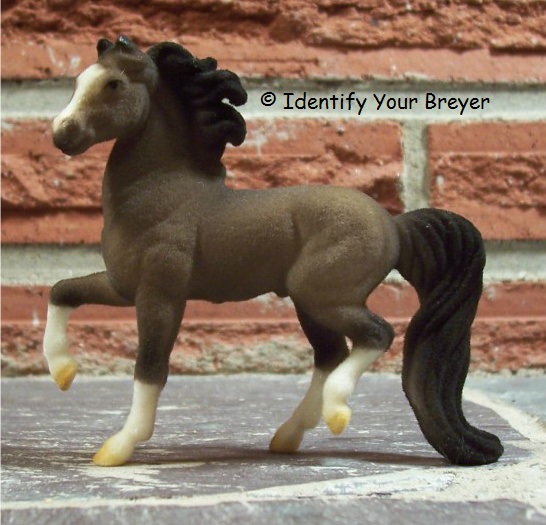
Stablemate G2 Morgan
---2001 (BreyerFest): Flocked steel grey (came with flocked Jack Russell companion animal)
Custom/Aftermarket Flockies
Many collectors are not familiar with the history of flocked models in the hobby, and in my experience, that's been the source of confusion about what is or is not an OF flockie. As I mentioned above, a number of companies, families, and miscellaneous hobby customizers made flockies. Because of this, aftermarket flockies probably outnumber OF flockies by quite a bit. Riegseckers is best known because they produced the OF runs for Breyer, but they made thousands of aftermarket flockies as well. Mel Riegsecker, the company founder, grew up on a farm near Shipshewana, Indiana, but rather than continue in that business, he became an entrepreneur. His family now runs a cabinet making business, a restaurant, and more. Mel got his start though making miniature harnesses and vehicles that he hitched to Breyer models. Riegseckers often flocked models, sometimes customizing them first with lowered heads or mule ears and the like. Their models were available in the '80s and '90s, and if you could dream it, they could make it for you.
Similarly, Eighmey's Wagon Shop flocked thousands of models and produced harnesses and vehicles as well. They used to have a booth at BreyerFest in the early 1990s, and I regret not taking a picture of it when I had the chance. Suffice it to say, it was an impressive sight with stacks of flocked Adios mules, Quarter Horse Gelding mules, all of the draft horse molds in any color you could think of, and more. The Diercks and Algyre family likewise produced many similar models, but their models usually had flocked over manes and tails rather than flowing mohair like Riegseckers or Eighmeys. Various customizers dabbled in flocking as well, some even creating dappled models. Because the highest volume producers were making and selling their models in farm country (Indiana, Iowa, etc) the vast majority of flockies to be seen are draft horses or mules.
Not surprisingly, owing to confusion about what constitutes an OF flockie, I've seen more than a few collectors claiming that their aftermarket flockies are test runs, OOAKs, or rare runs of only a few models. Hopefully, most are not doing so with the intent to deceive, but a few are. Without irrefutable documented provenance---at this point, I wouldn't accept anything less than a letter from Mel Riegsecker or Peter Stone certifying that a particular model was a test submitted to Breyer for approval---all of these so-called tests or rare flockies are just aftermarket customs. So do your homework and don't be fooled!
Now, that said, an aftermarket flocked model is not a bad thing by any means. As we've seen, prices for them are sky high, and with vintage custom collectibility becoming a thing (more on that in a future post), there will absolutely be a place for them at live shows and in collectors' herds. I show my own aftermarket flocked mule (below) in vintage custom classes, and she gets lots of admiration even if she doesn't win. (She is adorable after all.)

 |
| A pair of customized and flocked Belgians, possibly by Reigseckers (source: eBay) |
Many hobbyists tried their hand at flocking as well, and they didn't just stick to horses!
 |
| Aftermarket flocked cow (source: eBay) |
 |
| Some aftermarket models do not have haired manes and tails. They're just flocked over the sculpted mane and tail. Probably D &A. (source: eBay) |
Some aftermarket models are more popular than others. Drafters, Adios models, and Stablemates seem to be of particular interest to collectors.
 |
| Adorable flocked G1 SM Drafter (source: eBay) |